What New Research Means for You — A Plain-Language Guide
Sudden cardiac death is when the heart suddenly stops beating and a person dies within a short time — often within an hour of the first sign that something is wrong. It is different from a typical heart attack, though the two are related. A heart attack is a “plumbing” problem: a blocked artery starves the heart of blood. Sudden cardiac death is usually an “electrical” problem: the heart’s rhythm suddenly fails. Sometimes a heart attack sets it off — but not always.
Recently, a large study followed 943 sudden deaths over 12 years and carefully examined what actually caused each one. The results are changing how doctors think about this condition. Here is what they found, in everyday terms.
For years, doctors blamed clogged arteries — but that’s only part of the story
Doctors long believed that about 8 out of 10 sudden cardiac deaths were caused by heart attacks from clogged arteries. The new research shows the real number is closer to 4 out of 10. Heart attacks are still the single biggest cause — but they explain fewer than half of these deaths. The rest come from many other heart problems.
One artery deserves more attention than it used to get
The heart is fed by several main arteries. Doctors have traditionally worried most about the ones on the left side. But this study found that a blockage in the right-side artery (the “right coronary artery”) was actually the most common trigger. The lesson: a problem on the right side of the heart can be just as dangerous as one on the left.
Sometimes the arteries look clear
In some people who died suddenly, the arteries were not badly clogged at all — and this turned out to be more common than doctors realized. In these cases, the damage sometimes came from the heart muscle itself tearing or giving out, rather than from an abnormal rhythm. That matters because the usual emergency treatment (an electric shock to restart the rhythm) cannot fix that kind of problem. So even a “clear” artery scan does not guarantee the heart is safe.
There are many other causes, too
Beyond heart attacks, sudden cardiac death can come from a heart muscle that has grown enlarged and weak, a heart wall that has become too thick, old scar tissue from damage years earlier, and other conditions. In short, there is no single cause. It is a final event that many different heart problems can lead to.
The hardest truth: most people had no warning
This is the most important finding. Among the people whose deaths might, in theory, have been prevented with a defibrillator, only about 1 in 3 had a known heart risk beforehand. That means two out of three were never identified as high-risk. But here is the key point: most of them did have real heart disease — it simply had not been discovered yet. Doctors call this “silent” or “hidden” heart disease. Almost none of these people had a truly normal, healthy heart.
Sometimes the risk was known but not fully treated
Even among people who were known to be at risk, many were not receiving all of the medicines — or the protective implanted device — that medical guidelines recommend. This is a gap that can often be closed with the right follow-up care.
What about COVID-19?
During the pandemic, only a small number of these sudden deaths were linked to COVID-19, and the virus did not appear to be a major direct cause. The overall pattern of what causes sudden cardiac death stayed about the same.
Take Charge of Your Heart Health
While this research highlights the importance of identifying hidden heart disease before it leads to a life-threatening event, knowing your personal risk requires more than reading about the latest studies. A comprehensive cardiovascular evaluation can help uncover underlying conditions, assess your individual risk factors, and create a personalized prevention plan.
If you are interested in a more proactive approach to your heart health, Dr. Chauncey Crandall offers personalized concierge cardiology services in Palm Beach that provide extended physician access, advanced cardiovascular screening, and individualized care focused on prevention and long-term wellness.
What this means for you
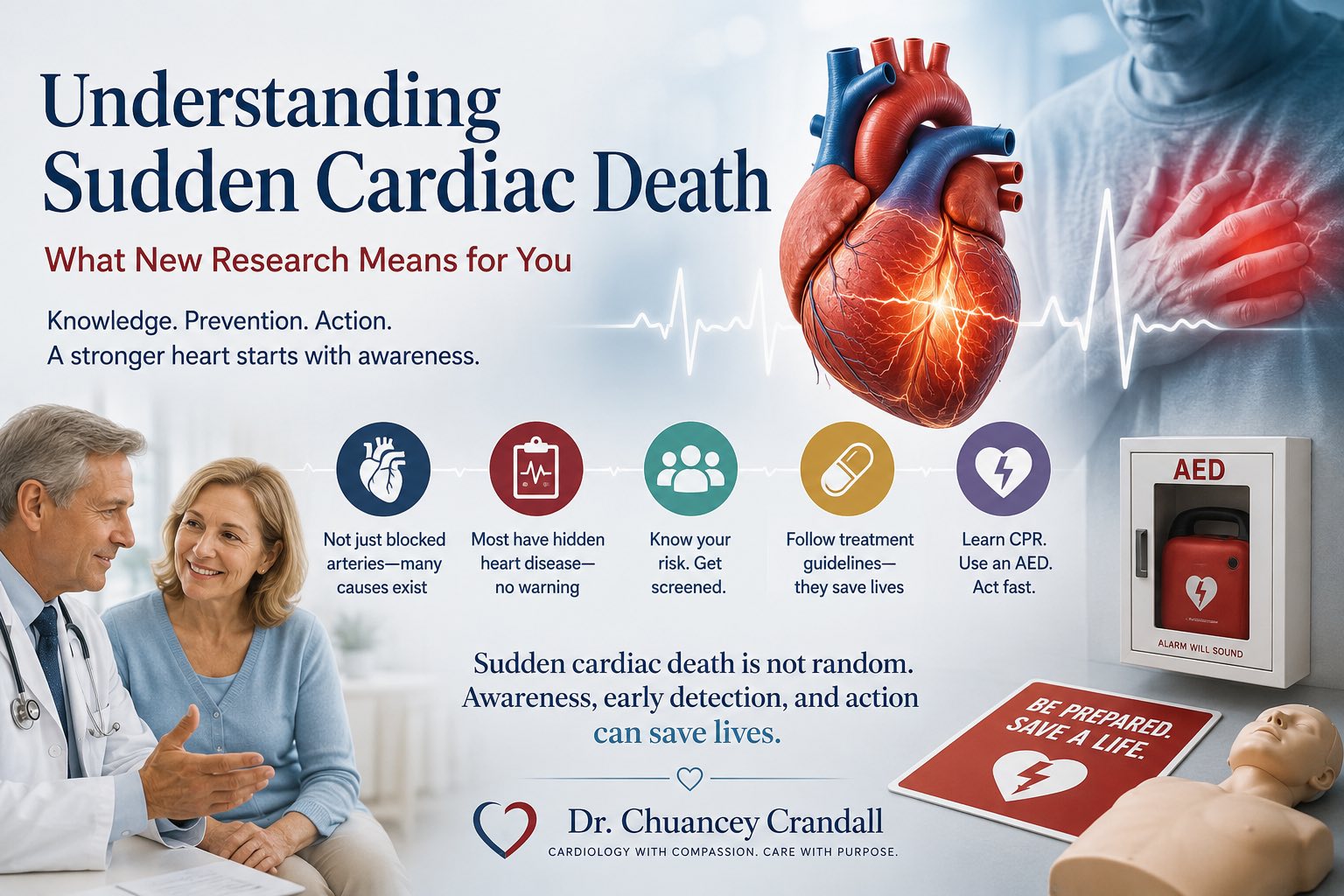
Feeling fine is not the same as being safe. Much of the heart disease behind sudden death is hidden and causes no symptoms until it is too late. The encouraging news is that a great deal of it can be found and treated — if you look for it. Steps worth taking:
- Don’t ignore your heart just because you feel well. Hidden problems are common.
- Know your numbers — blood pressure, cholesterol, and blood sugar — and keep them in a healthy range.
- Share your family history with your doctor, especially any relatives who died suddenly or at a young age.
- Ask your doctor whether heart screening (such as an EKG, an ultrasound of the heart, or other tests) makes sense for you.
- If you already have a heart condition, make sure you are on the full treatment your doctor recommends — and ask about a defibrillator if you have been told your heart is weak.
- Learn CPR and how to use an AED (the emergency shock device found in many public places). Fast action by a bystander saves lives.
None of this is meant to frighten you — quite the opposite. It shows that sudden cardiac death is not simply random bad luck. Much of the disease behind it can be uncovered and managed. The single most powerful step is a conversation with your doctor about your own heart.
This guide is general educational information based on research published in the Journal of the American College of Cardiology (2026). It is not a substitute for personal medical advice. Please talk with your own physician about your heart health.